
A Bit About Database Management Systems
Databases are logically modelled clusters of information, or data. A database management system (DBMS), on the other hand, is a computer program that interacts with a database. A DBMS allows you to control access to a database, write data, run queries, and perform any other tasks related to database management.
Although database management systems are often referred to as “databases,” the two terms are not interchangeable. A database can be any collection of data, not just one stored on a computer. In contrast, a DBMS specifically refers to the software that allows you to interact with a database.
All database management systems have an underlying model that structures how data is stored and accessed. A relational database management system is a DBMS that employs the relational data model. In this relational model, data is organized into tables. Tables, in the context of RDBMSs, are more formally referred to as relations. A relation is a set of tuples, which are the rows in a table, and each tuple shares a set of attributes, which are the columns in a table:
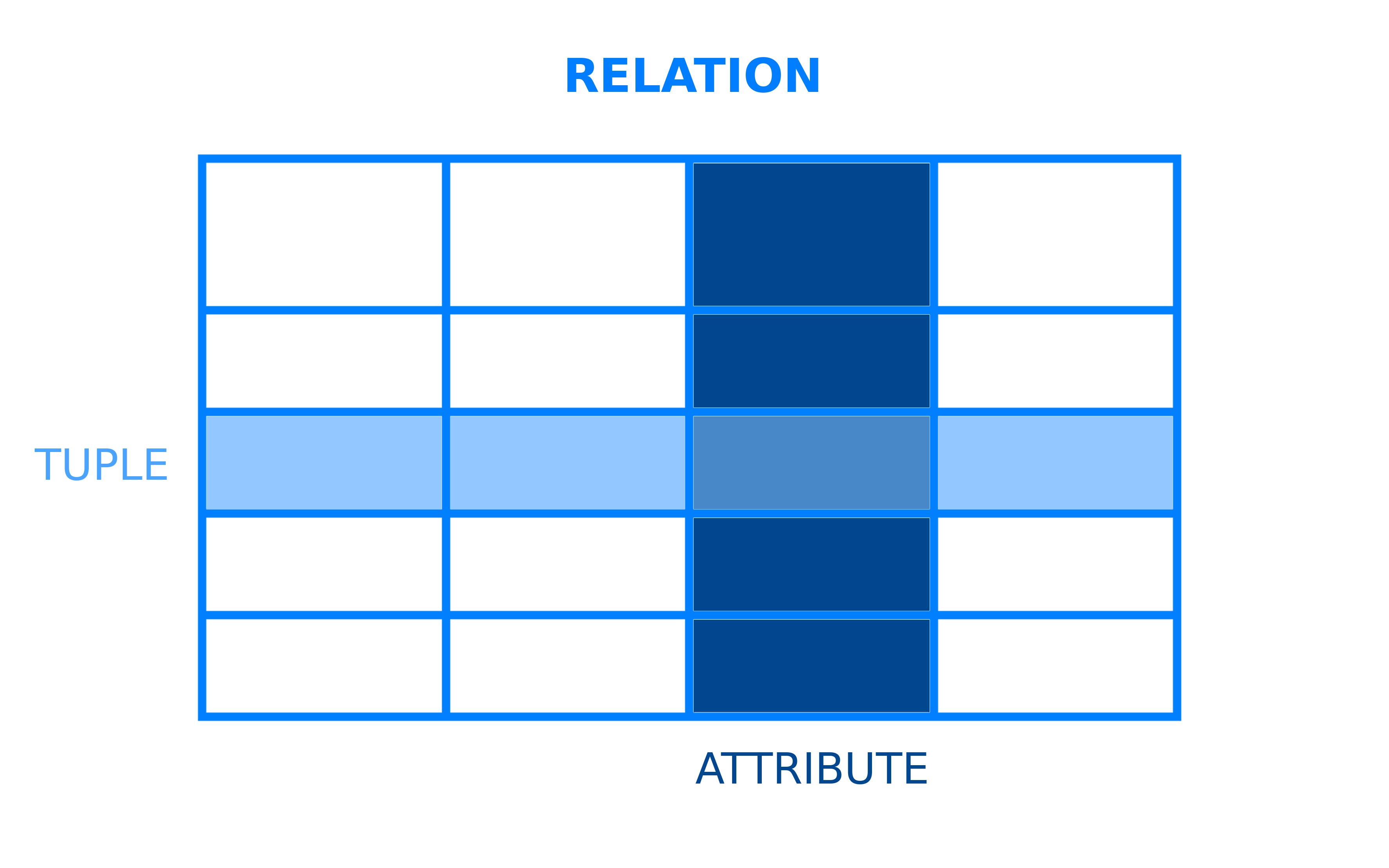
Most relational databases use structured query language (SQL) to manage and query data. However, many RDBMSs use their own particular dialect of SQL, which may have certain limitations or extensions. These extensions typically include extra features that allow users to perform more complex operations than they otherwise could with standard SQL.
See also:
Learnings:
- Literally everything is a database like a spreadsheet.
- Attributes, or columns, are assigned a data type, such as strings, dates, integers, booleans, array.